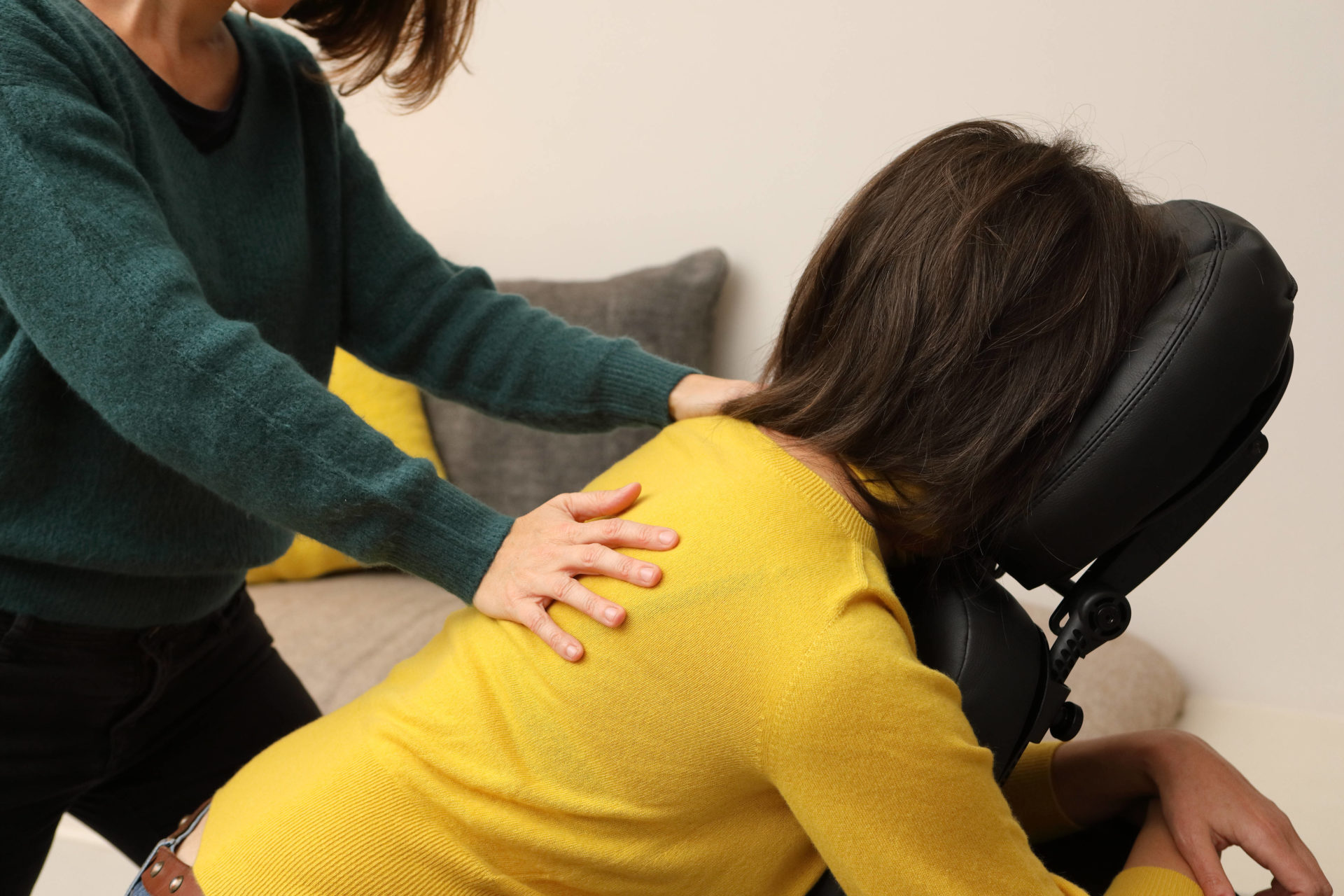
How do your shoulders feel as you read this? What about your neck and lower back? Is your body wonderfully relaxed?
Imagine receiving a massage at your workplace today. We can see you and your colleagues nodding enthusiastically now!
Chair Massage at Work: The Essentials at a Glance
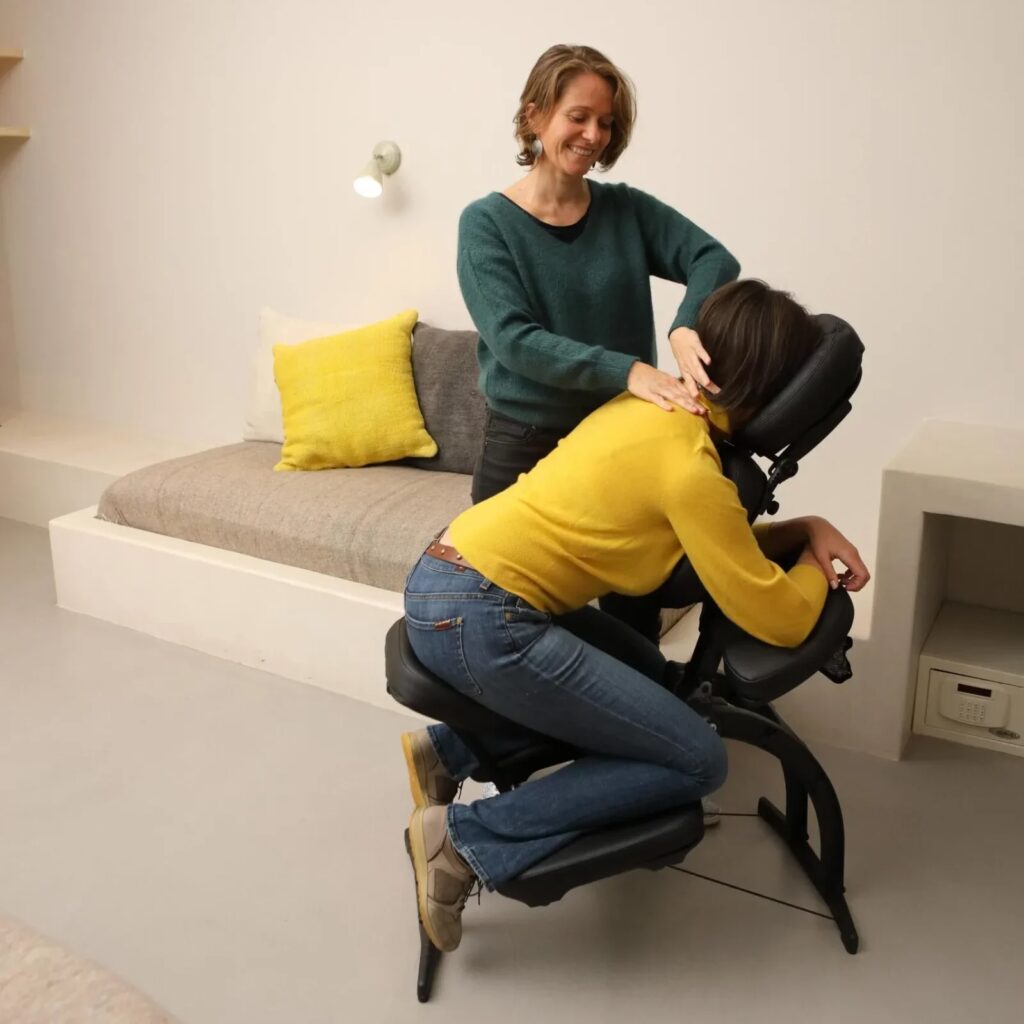
A corporate chair massage is a wellbeing break that allows employees to release physical and mental tension without leaving the workplace. Given fully clothed, without oil and generally lasting 15 to 20 minutes, it is easy to fit into a working day.
- Duration: usually 15 to 20 minutes, offering a refreshing break without taking up too much time.
- Areas targeted: mainly the neck, shoulders, back and hands, which are particularly affected by office work.
- Benefits: muscle relaxation, reduced tension and an overall sense of relaxation.
- At the office: the massage is performed fully clothed, without oil, in a quiet space of just a few square metres.
- Organisation: it can be offered as a one-off activity during a corporate wellbeing day or on a regular basis, with several massage therapists working simultaneously to accommodate larger teams.
- Good to know: even a short session can provide a genuine opportunity to switch off and allow employees to return to work feeling refreshed and re-energised.
Chair massage at the office: what are the benefits for your employees?
A chair massage at work offers your employees a wonderful opportunity to recharge, right in between their daily tasks. Physical tension is relieved. Mental and physical stress and tension become a thing of the past. The faces of those leaving the massage room speak for themselves!
Spending long periods in the same – and often poor – working posture can lead to chronic physical pain and stiffness. For most teams, this means sitting for long periods, whether in the car or at a desk. Lack of movement and prolonged static postures are among the factors that contribute to tension and pain at work. To explore this topic further, take a look at our advice on how companies can tackle sedentary behaviour at work. The same is also true of prolonged standing in certain jobs.
Long working hours and heavy workloads also create mental tension.
This combination of stress and tension is well known, and we also know that it often leads to lower motivation and absenteeism. In Belgium, 7% of the workforce was on long-term sick leave in 2022, compared with a 4% unemployment rate (La Libre Belgique, 15 January 2023). More recent figures from Belgium’s National Institute for Health and Disability Insurance (INAMI) highlight the scale of the issue: between 2021 and 2025, the number of employees and jobseekers on long-term incapacity for work (more than one year) increased by almost 18% in Belgium. Mental health conditions and musculoskeletal disorders are among the conditions showing particularly marked increases.
All of this comes at the expense of your employees’ health and performance. And that’s precisely what you want to avoid, isn’t it?