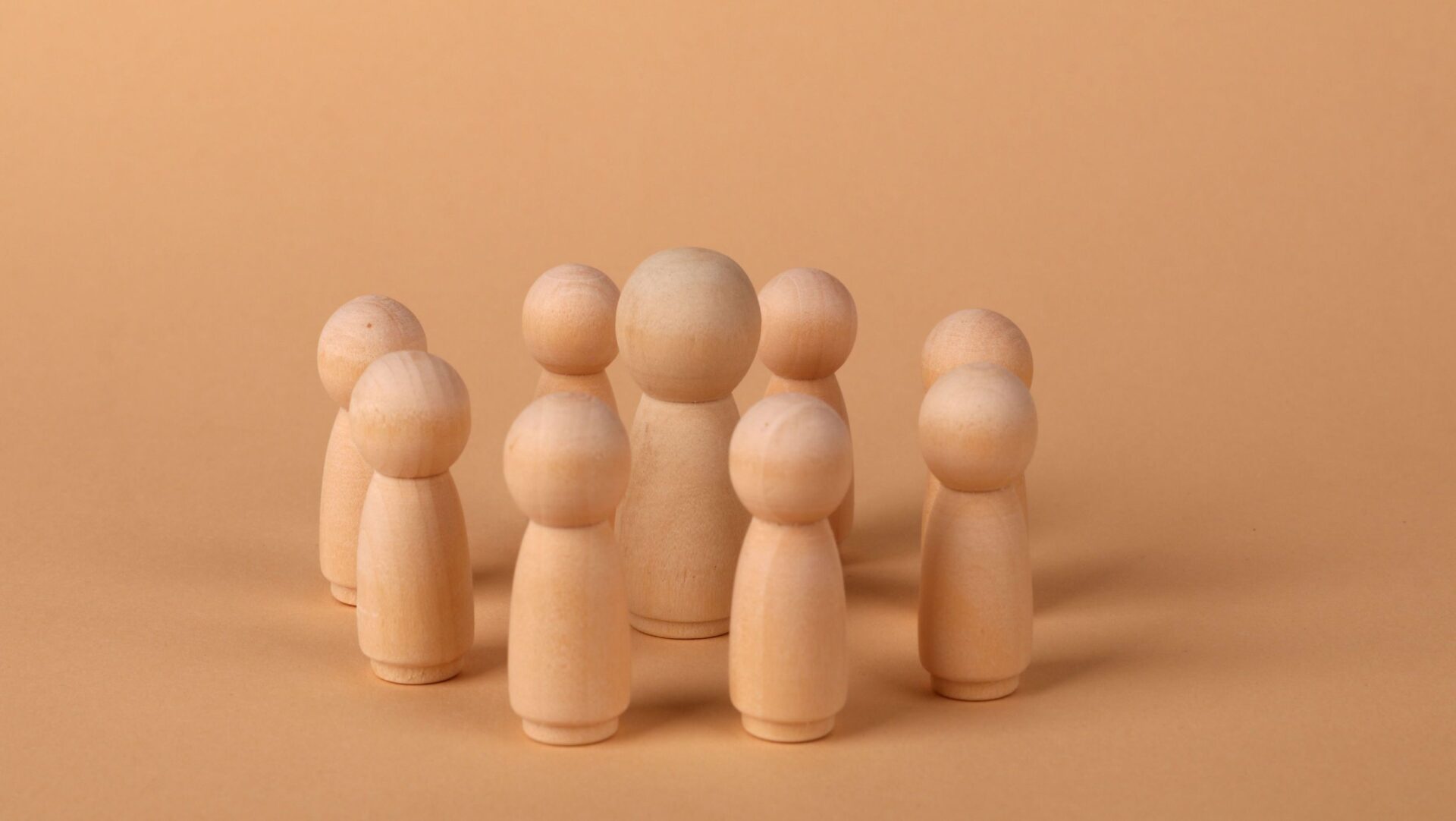
The quality and effectiveness of a team do not depend solely on each individual’s skills. They also rely on employees’ ability to communicate, cooperate, manage disagreements and adapt to change together. It is when these skills are developed collectively that a team becomes truly high-performing.
In other words, team cohesion is built over time. And the quality of interactions between employees is one of the main drivers of collective performance.
For the company, this translates into smoother collaboration, faster decision-making, greater adaptability in the face of change, and a climate of trust that encourages engagement and initiative.
A team that works well together is one where everyone feels able to suggest an idea, ask for help or express disagreement constructively.
Every team faces its own challenges. Some need to communicate better, others to overcome their own barriers, navigate change more effectively or understand different ways of working.
That is why our training programmes approach team cohesion from five complementary angles. All are based on proven approaches, translated into practical tools that can be directly applied in the professional environment.
And because behaviours do not change simply by listening to a presentation, our training programmes alternate theoretical input, experimentation, practical exercises and discussion to help teams embed new ways of working for the long term.
Collaboration difficulties do not always take the form of open conflict. They often appear more subtly: misunderstandings that build up, things left unsaid, ineffective meetings, resistance to change, ideas that are never voiced, or differences in ways of working that slow projects down.
Over time, these dynamics affect the quality of decisions, employee engagement and collective effectiveness.
Communicating, cooperating, managing disagreements and navigating change are skills that can be learned.
Our training programmes favour an active learning approach based on experimentation, practical exercises and discussion. Our objective is not simply to improve communication during a training day, but to help teams develop new reflexes in their everyday interactions that last well beyond the training.
Are you looking for practical solutions to improve your team dynamics, support organisational change or encourage more effective collaboration? We adapt the content, duration and format of our training programmes to your specific needs.
We do not deliver standardised programmes. Our experienced trainer coaches design each intervention around your objectives, your industry and the realities of your teams.
Every company is unique, and every training programme should be too!
We come directly to your offices or to a location of your choice, anywhere in Belgium. Your employees train together, in their real working environment: this is key to creating a lasting impact on behaviours. Practical exercises are therefore more relevant, and the learning is easier to transfer into everyday professional life.
We design a format that matches your objectives and operational constraints.
Our training programmes start at half a day.
We can, of course, work with you to build a programme combining several training modules, either for a more comprehensive approach to team cohesion or to bring together different themes (see also our training programmes on stress management and energy and human development in the workplace). This allows us to create a broader development programme focused on stress prevention, workplace health and sustainable performance.
Groups are limited to a maximum of 16 participants to ensure the interactive nature of the training. Larger groups can also be accommodated with several trainers, providing the same quality of support.
We take care of as much of the practical organisation as possible, providing the necessary equipment and helping you with your internal communication. If hosting the training at your company is not possible, we can also help you find the right venue.
Tell us about your project and let’s create an impactful training experience for your teams together.
Here are our five complementary training programmes designed to transform the way your employees interact and work together as a team:
Why do some teams hesitate to take initiative even when they have all the skills they need? Fear of making mistakes, being judged or failing often holds people back from taking action.
This training helps employees identify these barriers, develop a growth mindset and create an environment where everyone learns from mistakes, dares to try and contributes more.
Result: teams that take action and take responsibility
In any transition, people make the difference. Mergers, office moves, departures or redundancies: professional life is not always a smooth journey.
So how can we help employees understand the meaning of change, become more involved and take an active role in the transition?
This training uses proven tools to help teams become aware of their reactions to change, understand them and develop strategies to navigate periods of transition more effectively. For managers, it also provides tools to better support employees as they adapt to the inevitable changes within an organisation.
Result: teams that navigate change with greater engagement and ease
Why can two well-intentioned colleagues sometimes get on each other’s nerves every day? Often because they have different ways of working and different expectations.
This training helps each participant better understand their own reactions, decode those of others and turn these differences into complementary strengths.
Result: teams that turn differences into complementarity and work together rather than simply coexist
Have you noticed what creates tension within a team? Very often, it is as much about what remains unsaid as what is actually said.
Nonviolent Communication, enriched by other tools drawn from our experience in the field, provides a powerful framework for addressing this. By learning to listen more effectively and express their needs more clearly, while taking different profiles into account, employees can establish constructive dialogue even in the most challenging situations.
Result: teams that communicate constructively
Why can the same message motivate one person while demotivating another? Because everyone communicates, makes decisions and reacts differently.
This training helps participants identify the main behavioural profiles so they can adapt their communication and make workplace relationships more fluid.
It draws in particular on the DISC and Insights models, two widely used frameworks for understanding different communication and collaboration styles.
Participants learn to identify their own way of working as well as that of their colleagues, enabling them to adapt their interactions and strengthen cooperation.
Result: teams that naturally adapt their interactions and turn differences into a real strength
Communicating, cooperating, navigating change and developing a growth mindset are skills that reinforce one another. That is why we have brought together complementary approaches that are rarely offered within the same training portfolio: growth mindset, change management, relational intelligence, nonviolent communication and behavioural profiles.
You can choose the training that addresses your current challenge, or combine several modules to create a genuine team collaboration development programme.
Our training programmes draw on recognised references in psychology, behavioural sciences, neuroscience and communication, but they never stop at presenting a theoretical model.
The objective is not for your employees to know Carol Dweck, Marshall Rosenberg, Kübler-Ross, the Ofman Core Quadrants or DISC profiles. The objective is for them to leave with communication, collaboration and relationship-management reflexes that they can genuinely use in their everyday professional lives.
We are not simply looking to improve the quality of interactions during a training day.
Practical exercises, role plays, experience sharing and collaborative activities help teams become aware of their automatic patterns, experiment with new ways of interacting and build more effective practices together.
It is these lived experiences that make learning last.
Our trainer coaches have been supporting companies of all sizes for several years with their collaboration, communication and change management challenges.
They know how to adapt the tools to the realities of your organisation, your industry and your teams.
Every intervention is designed around your objectives, your company culture and the maturity of your teams.
We come directly to your offices, anywhere in Belgium, so that your employees can work together in their real environment and transfer their learning into their everyday professional lives.
The “growth mindset”, a concept developed by Carol Dweck, is based on the belief that our abilities can develop through effort rather than being determined by innate talent.
Applied in the workplace, it can make the difference between a team that remains stuck and one that continues to progress: we try, we learn, we move forward.
In practical terms, it means fewer limiting beliefs, greater initiative, and mistakes becoming opportunities to learn rather than barriers to action. In a context where companies must constantly adapt, this mindset can be a powerful driver of innovation and collective performance.
Supporting change is not simply about explaining a decision. It also means understanding the reactions it triggers and giving employees the means to deal with them.
Our training helps teams identify their barriers, understand the mechanisms behind resistance and develop reflexes that facilitate engagement with change.
Result: smoother transitions and a team that moves forward together rather than simply undergoing change.
Nonviolent Communication (NVC), developed by Marshall Rosenberg, is based on four stages: observation (describing facts without judgement), feelings (expressing what we feel), needs (identifying the underlying need) and requests (making a clear request).
These four pillars can transform communication in the workplace: tensions are defused, dialogue becomes more constructive and interactions remain respectful, even when the stakes are high. NVC is now widely used within organisations to improve the quality of workplace relationships and prevent conflict.
The DISC model identifies four broad behavioural styles, often represented by colours: red (results-oriented), yellow (relationship-oriented), green (stability-oriented) and blue (precision-oriented).
The aim is not to put people into boxes, but to better understand their communication preferences. DISC, like the other models we use, helps both managers and employees adapt their communication, delegate more effectively and cooperate more successfully on a daily basis.
The calculation is simple: the cost of an unresolved conflict, avoidable employee turnover or a disengaged team is far greater than the cost of training.
Companies that invest in team cohesion generally see better collaboration, fewer conflicts, improved talent retention and increased productivity.
Beyond the figures, everyday working life changes: smoother working relationships, faster decision-making and teams that enjoy working together more.
Team cohesion is built over time. It relies on effective communication, a better understanding of how each person operates, the ability to manage disagreements constructively and a shared vision.
Our training programmes develop these different skills through practical tools that can be directly applied in everyday professional life.
Tell us about your project. We would be delighted to create a programme together that matches your teams and your company culture!
Nous utilisons des cookies pour vous offrir la meilleure expérience en ligne. En acceptant, vous acceptez l'utilisation de cookies conformément à notre politique de confidentialité des cookies.
Lorsque vous visitez un site Web, il peut stocker ou récupérer des informations sur votre navigateur, principalement sous la forme de cookies. Contrôlez vos services de cookies personnels ici.